整理/张渺 制图/董怡璇
治世之音安以乐
儒家的礼乐观与乐教思想主张,音乐发端于人心,同时又能反过来打动人心。国家政治稳定的根基,在于人心安宁祥和。若社会太平、世道安稳,人们自然情绪安定、心情愉悦,这种心境便会在音乐中流露出来,使其风格偏向安宁欢快。反过来,安宁欢快的音乐也能让人情绪稳定、情感谐和,进而调节社会氛围。从这个角度看,音乐和政治是相通的,能起到维护稳定、移风易俗的作用。
Music in an Era of Order Expresses Peace and Delight
According to the Confucian views on rites, music and music education, music arises from the human mind and moves the people. A country enjoying peace and order makes people feel peaceful and harmonious. In an era of peace and stability, people will naturally be in a peaceful mood, which finds expression in the idyllic and merry styles of music created by them. The idyll and merriness of music helps foster a fine social atmosphere by creating serenity and mental harmony among the public. In this sense, music has a political function, as it helps maintain order and cultivate morals and mores.
引例
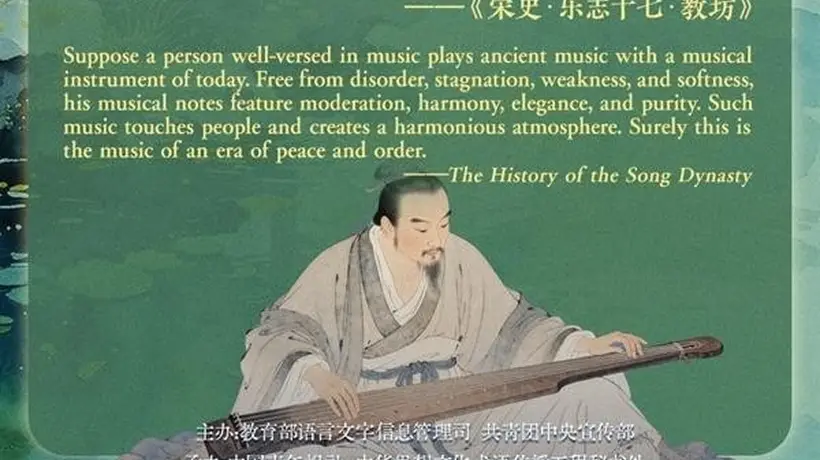
试使知乐者,由今之器,寄古之声,去惉懘靡曼而归之中和雅正,则感人心、导和气,不曰治世之音乎?(《宋史·乐志十七·教坊》)(假如让一个通晓音乐的人,用当下的乐器演奏古代乐曲,剔除其中滞涩不谐和纤弱柔美的成分,回到适中、平和、高雅、纯正的风格,由此感动人心、引导和谐风气,这难道不是太平盛世的音乐吗?)
Suppose a person well-versed in music plays ancient music with a musical instrument of today. Free from disorder, stagnation, weakness, and softness, his musical notes feature moderation, harmony, elegance, and purity. Such music touches people and creates a harmonious atmosphere. Surely this is the music of an era of peace and order. (The History of the Song Dynasty)
来源:中国青年报
2026年07月20日 01版